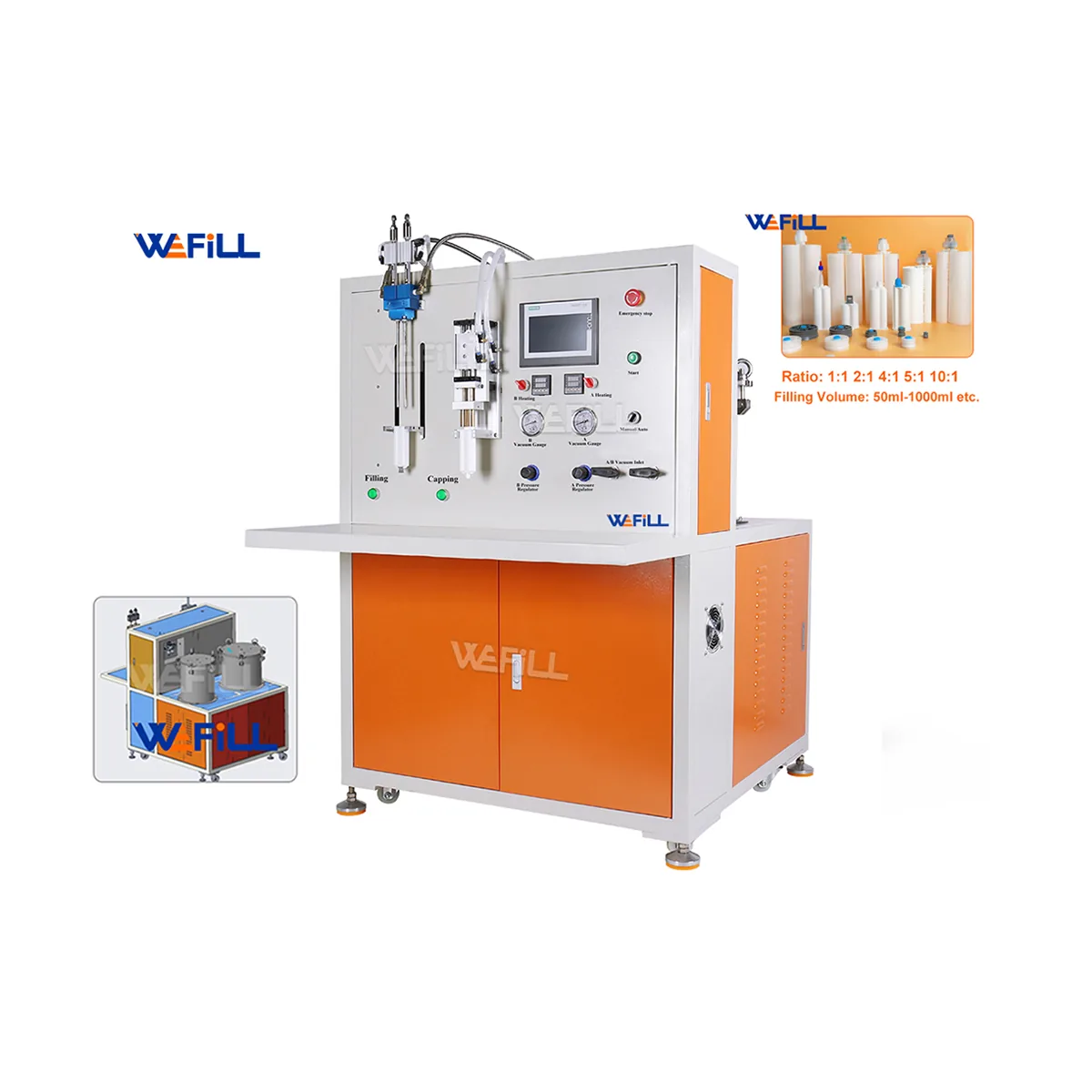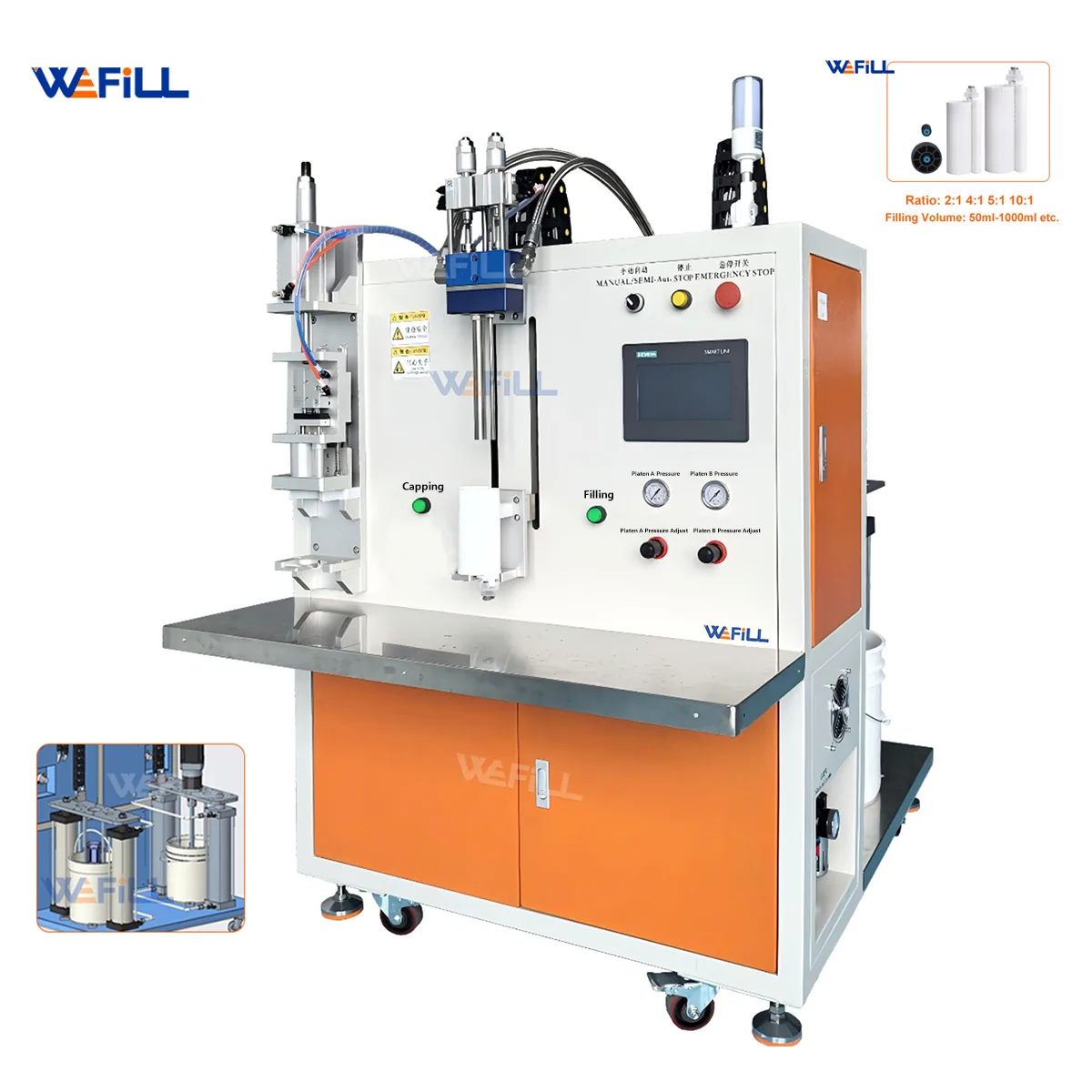
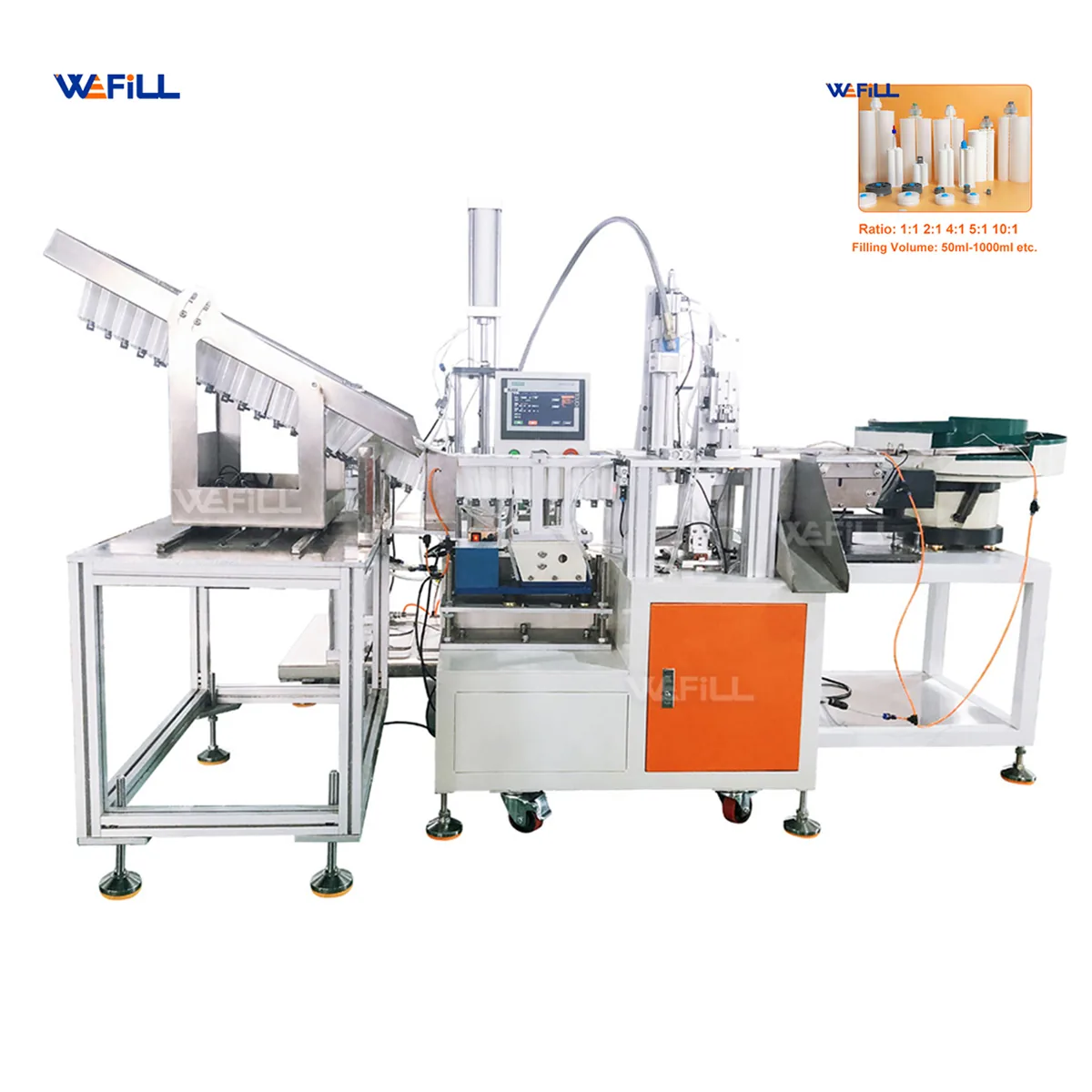
Ratio range, viscosity, cartridge format and realistic output. A practical checklist to settle before you ask a supplier for a quotation.
Start with the cartridge, not the machine
The cartridge defines almost everything downstream. Total volume, the A:B divider position, whether you use a 50 ml side-by-side or a 490 ml 10:1 coaxial format, and the type of piston and tail cap all constrain the metering and pressing station. A machine quoted before these are fixed is a guess.
Send a drawing or physical samples with your enquiry. If the format is still open, ask which geometries the platform already has tooling for — a proven fixture is usually faster and cheaper than a new one.
Ratio and viscosity set the metering system
A 1:1 epoxy and a 10:1 polyurethane do not place the same demands on dosing. Wider ratios need independent A and B metering with ratio verification, and high-viscosity or filled materials often require a vacuum tank feed and heated path rather than a standard pressure feed.
Ask for the viscosity range in centipoise at working temperature, not just a product name. Two adhesives sold as the same chemistry can behave very differently once the filler content and temperature change. We publish indicative ranges on every equipment page and confirm feasibility in writing after a sample filling trial.
Output figures need their test conditions
Cartridges per minute is only meaningful alongside fill volume, ratio, viscosity and the cycle scope — loading, filling, piston insertion, capping and discharge. A figure measured on a 10 ml syringe says little about a 600 ml cartridge.
For a new line, size the machine for a sustainable shift output rather than a peak cycle. Semi-automatic units around 8–10 cartridges / min suit pilot runs and short batches; fully automatic cells in the 10–20 cartridges / min range make sense when the format is stable and changeovers are rare.
What to prepare before requesting a quotation
A short, complete brief removes most of the back-and-forth and produces a comparable offer from every supplier.
- Adhesive name, TDS and a sample for testing
- Approximate viscosity at working temperature
- Mixing ratio and target fill volume
- Cartridge, piston and cap drawings or samples
- Required output in cartridges per minute
- Raw material container and size, and available utilities
A note on what the factory can verify
Before shipment every machine completes a no-load trial run covering motion sequences, alarms and idle cycling.
Discussing a filling project?
Send your material and cartridge details. Our engineers will recommend a configuration and confirm feasibility after a sample filling trial.